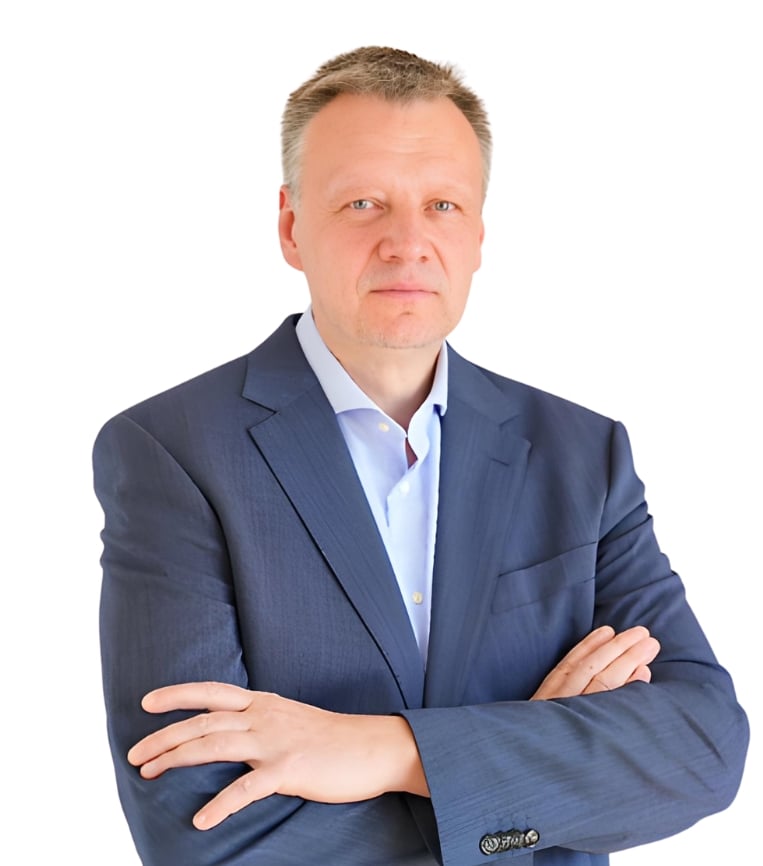
Raitis Logins: The Key Benefit of Merging Ministries — Less Bureaucratic Healthcare

By: Raitis Logins
28 Apr 2026 3 min read

Raitis Logins, Partner at the international financial advisory firm Grant Thornton Baltic, notes that the primary benefit to society from merging the Ministries of Health and Welfare would be more efficient and less bureaucratic coordination of healthcare and social services within the sector, rather than financial savings or workforce optimisation.
“At present, we see many solutions getting stalled between the two ministries, which often hold differing views and are unable to reach decisions that best serve the public interest. A unified ministry would improve the decision-making process, enabling better delivery of social and healthcare services to specific population groups,” explains Raitis Logins.
While both ministries are among the most resource-intensive in terms of funding and human capital (including their subordinate institutions and areas of influence), their functions differ significantly. As a result, merging them is unlikely to generate substantial financial savings. It is clear that funds will not be reallocated between the healthcare and social budgets. However, improvements in decision-making processes could represent the most significant benefit.
Grant Thornton Baltic also highlights several European examples where such mergers have been implemented. Estonia serves as a notable case, where the two areas have been combined under one ministry, sometimes led by two ministers overseeing separate portfolios — social protection and healthcare. In 2025, Estonia reverted to a single-minister model overseeing both areas.
A similar structure exists in countries such as the Netherlands, where health, welfare, and sports are combined under one ministry, as well as in Finland, Austria, Sweden, the United Kingdom, and Norway, where healthcare is integrated with social services.
If the Ministries of Welfare and Health were merged in Latvia, the combined entity would oversee a significant portion of the state budget. In 2026, €1.97 billion is allocated to healthcare and €6.04 billion to welfare, representing approximately 44% of the total €17.9 billion state budget. Against this backdrop, potential administrative cost savings from eliminating overlapping functions would be relatively limited. It is also important to avoid scenarios similar to the creation of the Ministry of Climate and Energy, where initial expectations of stable administrative costs and staffing levels were not met in practice.
According to Raitis Logins, Latvia would benefit from a broader review of ministerial functions. In the context of optimising administrative structures and public spending, the government should consider reducing the number of ministries. Several years ago, the Ministry of Climate and Energy was established by reallocating functions from the Ministry of Economics and the Ministry of Smart Administration and Regional Development, despite those institutions previously managing these responsibilities effectively.
Latvia currently has the highest number of ministries per capita among the Baltic States. Estonia, with a smaller population, operates with 11 ministries, while Latvia has 14 — the same number as Lithuania, which has approximately one million more inhabitants. Moreover, Latvia has the smallest state budget and the lowest budget revenues among the Baltic countries. These factors support the case for a more compact and efficient public administration with fewer ministries.
Grant Thornton Baltic has been operating in the Baltic region for 30 years and is one of the leading financial advisory firms, specialising in audit, accounting, tax, legal, financial advisory, and real estate and business valuation services in Estonia, Latvia, and Lithuania. The firm employs more than 300 professionals and serves over 3,000 clients. In Latvia, Grant Thornton Baltic is the fifth-largest audit and financial advisory firm, with a team of over 70 professionals. Globally, Grant Thornton is the sixth-largest network of financial advisory firms, with more than 750 offices in 156 countries.