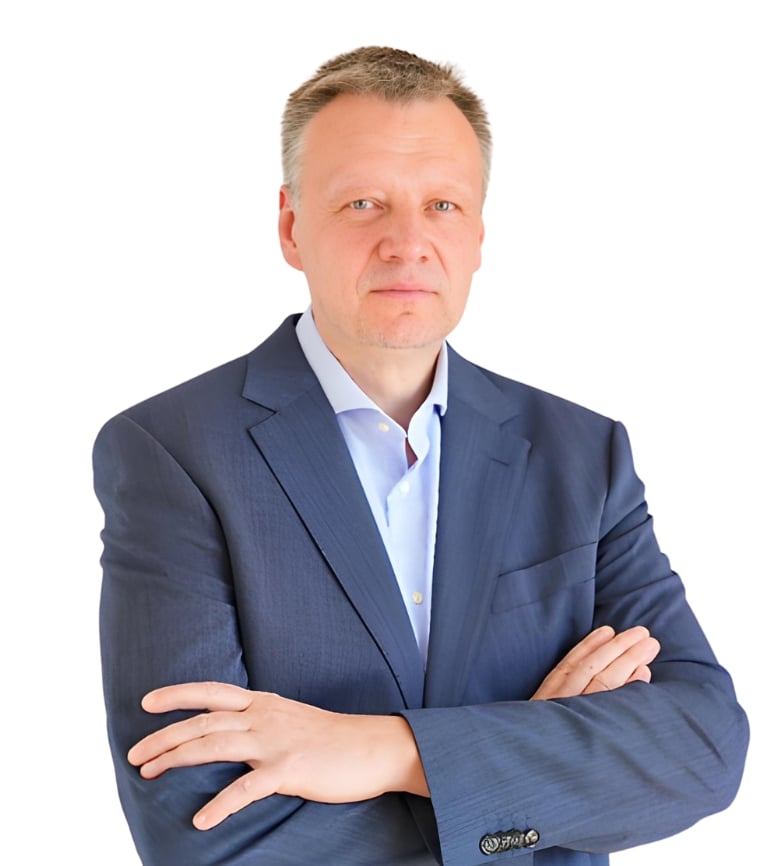
Grant Thornton Baltic Partner Aleksandrs Vellers on business valuation, investors’ views of Latvia, the impact of artificial intelligence and what business owners should consider when planning a sale.
How have your responsibilities changed since becoming a Partner at Grant Thornton Baltic?
Until 2025, I led the Valuation and Financial Advisory service line, covering the valuation of businesses, real estate and movable assets; financial due diligence; and a range of financial advisory projects — from loss assessments to opinions on investment projects and business plans.
Since becoming a Partner, my responsibilities have expanded to encompass the entire advisory business. Alongside financial advisory, this includes tax and legal advisory services. My professional focus remains on valuation and financial advisory, while a strong team and the heads of each service line help deliver our broader advisory offering.
The role of a Partner also involves greater participation in the development of the firm. Since 2026, I have also been a member of the Grant Thornton Baltic Board, contributing to the resolution of strategic matters alongside colleagues in Latvia, Lithuania and Estonia. This allows me to view our operations not only through the lens of one service line, but from the perspective of the entire Baltic region.
What are the most significant changes in the financial advisory industry?
One of the most significant changes is the emergence of artificial intelligence. Solutions are evolving so quickly that businesses are still exploring the best ways to use them, testing different possibilities and adapting their processes. The cost of these solutions is also changing, so artificial intelligence is not always as inexpensive or effective as it may initially appear.
I also believe we need to consider the long-term impact on the development of professionals. If technology takes over more technical, day-to-day tasks — the type of work junior colleagues typically begin with — the question is: how will young professionals gain the experience they need to become experts in the future? At present, there are more questions than answers.
How do you assess Latvia’s business environment and investment opportunities compared with Lithuania and Estonia?
In many respects, Latvia offers an investor-friendly business environment. We have a high level of digitalisation in public administration, relatively clear processes and well-organised document flows. We do not always recognise these advantages ourselves, but foreign investors value them when comparing their experience across countries.
At the same time, there are areas that require improvement: professional process and project management, legislative stability, accountability for decisions made and reliable public administration.
The investment and M&A market in the Baltic States is small, which means that a single large transaction can materially alter the overall picture. Lithuania has a larger and more diversified economy, providing a steadier flow of transactions and broader access to local private capital. Estonia stands out for its more developed start-up ecosystem and technology investment market. In Latvia, transactions are more dependent on foreign strategic buyers. However, the Baltic market should often be viewed as a whole, as many companies and transactions span all three countries.
What currently has the greatest impact on the value of Latvian companies?
The geopolitical situation is a significant factor. Latvia is located on the eastern border of the European Union, close to an active war zone, and international investors take these risks into account. This affects valuation multiples: a company with unchanged revenue and profit indicators may today be valued lower than it would have been several years ago.
However, risk is not the only consideration. A company’s scale, growth trajectory, profitability, ability to generate cash flow and competitiveness remain highly important. Investors are looking for businesses with a clear development outlook and a sustainable business model.
What do business owners most often underestimate when considering the value of their business?
An owner will usually see greater value in their business than a potential investor does, which is entirely understandable. However, a company’s value is determined not only by its market position and financial performance, but also by how transparently and efficiently it is organised.
For example, assets unrelated to the core business should be separated, and the balance sheet and cost structure should be put in order. A clear governance model is equally important. If a company’s expenses include the owner’s family costs that are unrelated to the business, or if the financial information contains numerous difficult-to-substantiate adjustments, this may raise questions for a potential buyer and reduce their confidence.
What would you advise an entrepreneur who plans to sell their business in three to five years?
Start preparing today, rather than when the decision to sell is made. The company’s structure should be organised, separate business lines and risks should be segregated where necessary, financial reporting should be transparent, and the business should maintain stable and sufficiently strong profitability.
It is equally important to strengthen the company’s market position and demonstrate its potential for development. A good business is one that grows, generates profit and continues to evolve. Such a business will also have value in the eyes of an investor. The more transparent, financially stable and prepared for the future a business is, the stronger its position will be in negotiations with a potential buyer.
You joined the Grant Thornton team in 2015 and have worked in financial advisory and business valuation for 21 years. How did you enter this profession?
In fact, it happened by chance. When I began studying economics, I had not expected to work in this particular field. One of my lecturers offered me the opportunity to write a course paper on business valuation, which opened the door to an international audit and advisory firm. I did have to fight for that opportunity, though, by reminding the lecturer several times of the promise that had been made. That is how I entered an industry that captured my interest and has held it ever since.
Over the years, we have significantly developed our methodology, work planning, quality management and reporting. Today, the quality and methodology of our valuation and financial advisory services are comparable to the best examples in the industry, including the practices of large international advisory firms.